Still Life

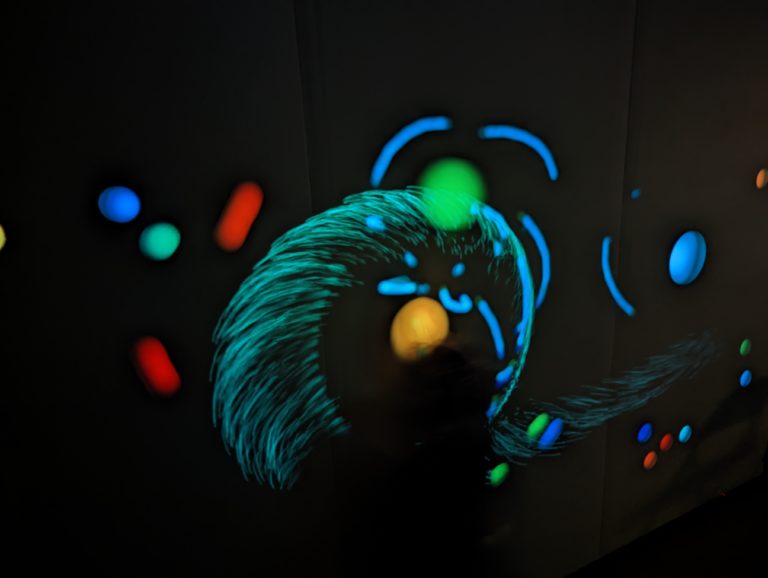
In 2011, as part of Hack.Art.Lab, I collaborated with composer Mary Ellen Childs and percussionist Michael Holland to create live animation triggered by live performance of Mary Ellen Childs’ composition “Still Life.”

Still Life performance and discussion
Video courtesy of Wichita State University Media Resources Center

We analyzed the piece into 11 sections and created algorithmic video triggered by sound and motion to match each of the 11 sections. The video was projected in front of the players on a semi-transparent scrim.

The algorithms generating the video were statistical as opposed to deterministic. In addition, the performers themselves by nature will never perform the work identically between two performances. These two aspects guarantee that every performance of the piece will generate a unique and unrepeatable set of video during the performance.

We attached infrared LEDs to the performers’ percussion sticks so they could be tracked in real-time by 3 modified video cameras. From a high level I controlled the animation during the performance by tracking the section change and pressing the appropriate button on my custom software.
Similar Posts

  • LegalLanguage

    I wrote LegalLanguage, a scripting language for lawyers at Legal Services Corporation in West Virginia. The staff used LegalLanguage to write simple scripts that could then ask clients questions, give guidance, and print out the appropriate forms. This freed up resources to focus on the large number of cases involving domestic violence.

  • Touch #1

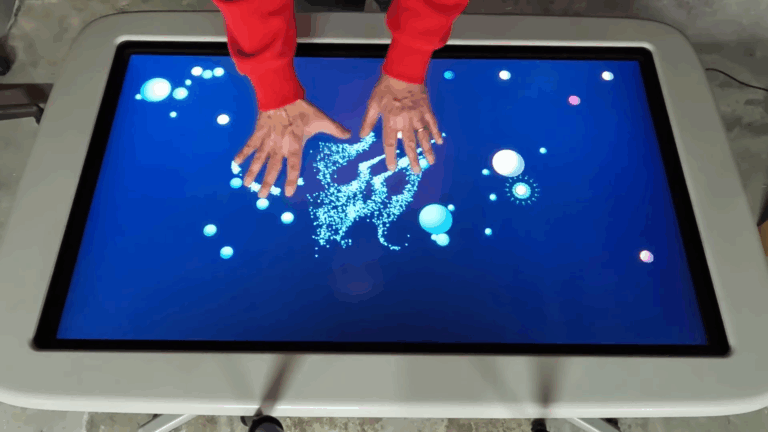
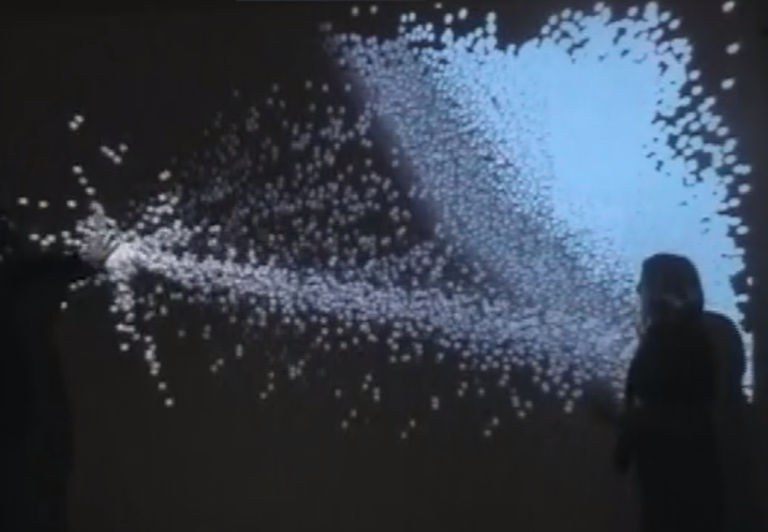
    In 2012 I created my first interactive touch wall: Touch #1. The work built on my experience creating the visuals for Still Life and was largely inspired by seeing autistic children experiencing pure joy while interacting in an immersive environment. Touch #1 received a great response and was later installed at Exploration Place and at…

  • Digital Puppetry

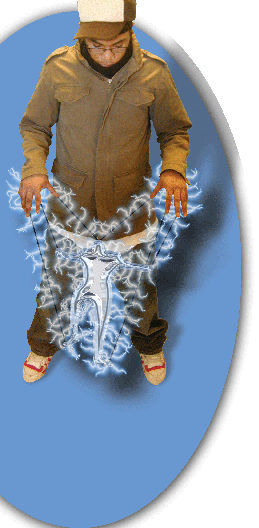
    I worked with a team of colleagues, community members, and urban youth. Our intention was to help the youth learn in a playful environment, find personal self-expression, and have their voices heard by communities in Boston. To do this, we adapted commercially available technology to provide a unique medium: digital puppetry.

  • DoubleTalk

    Doubletalk, a two player audio-manipulation game was my first serious endeaver with the Gameboy. The game used the Pocketvoice, a Gameboy cartridge with a built-in amplified speaker and microphone. In Doubletalk, players record themselves, reverse their recordings, then try to guess what each other is saying.