Touch #1

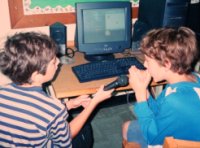
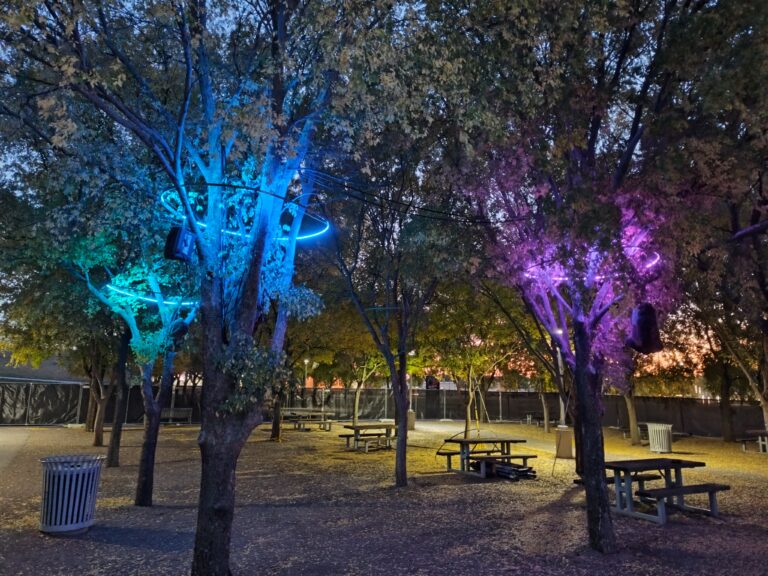
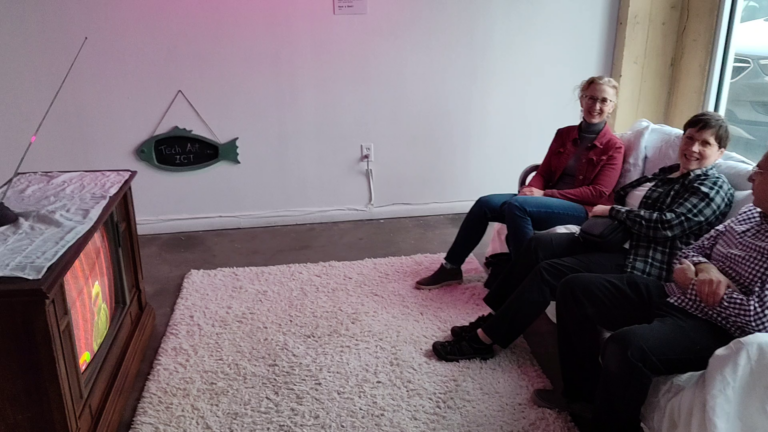
In 2012 I created my first interactive touch wall: Touch #1. The work built on my experience creating the visuals for Still Life and was largely inspired by seeing autistic children experiencing pure joy while interacting in an immersive environment.

Touch #1 at Shiftspace Art Gallery, 2012

Touch #1 received a great response and was later installed at Exploration Place and at Living Arts Gallery in Tulsa. Touch #1 was also the inspiration for my next touch wall, Touch #2.
Similar Posts

  • Ghost in the Machine

    Originally conceived in 2008, Ghost in the Machine (GITM) consists of a webcam and display which mixes and crossfades events in realtime with motion-activated video it has recorded previously. It continually shifts between 3 states: individual, community, and the world. GITM has been shown in many venues and contexts.

  • Minigolf at Figment in New York

    As a faculty member Wichita State University’s College of Engineering (WSU), I worked with students to create and install a mini-golf hole as part of FIGMENT at Governor’s Island, NY in 2010. I also gave the keynote address that year for FIGMENT’s public art opening. WSU’s mini-golf hole was chosen from a juried selection. Our…

  • Still Life

    In 2011, as part of Hack.Art.Lab, I collaborated with composer Mary Ellen Childs and percussionist Michael Holland to create live animation triggered by live performance of Mary Ellen Childs’ composition “Still Life.” We analyzed the piece into 11 sections and created algorithmic video triggered by sound and motion to match each of the 11 sections. The video was projected…

  • TechArtICT

    In May 2022 I founded TechArtICT, collective which creates and installs interactive and immersive artwork. TechArtICT features a rotating group of artists and engineers who collaborate, imagine then build innovative work at the intersection of engineering and art. TechArtICT has created several installations regionally, including Cybergarden at Towne West Mall, Search for Solace at the…

  • DoubleTalk

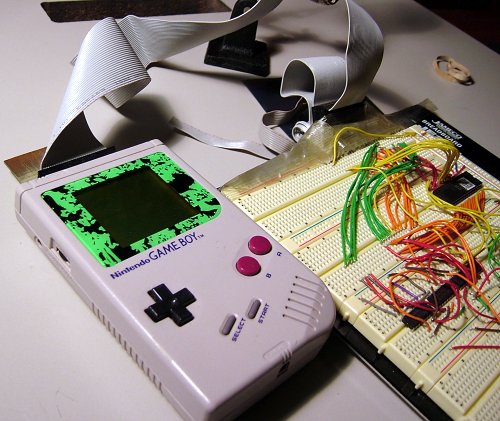
    Doubletalk, a two player audio-manipulation game was my first serious endeaver with the Gameboy. The game used the Pocketvoice, a Gameboy cartridge with a built-in amplified speaker and microphone. In Doubletalk, players record themselves, reverse their recordings, then try to guess what each other is saying.