SoundScratch

SoundScratch

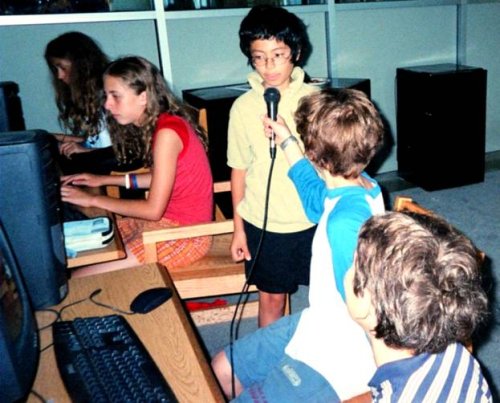
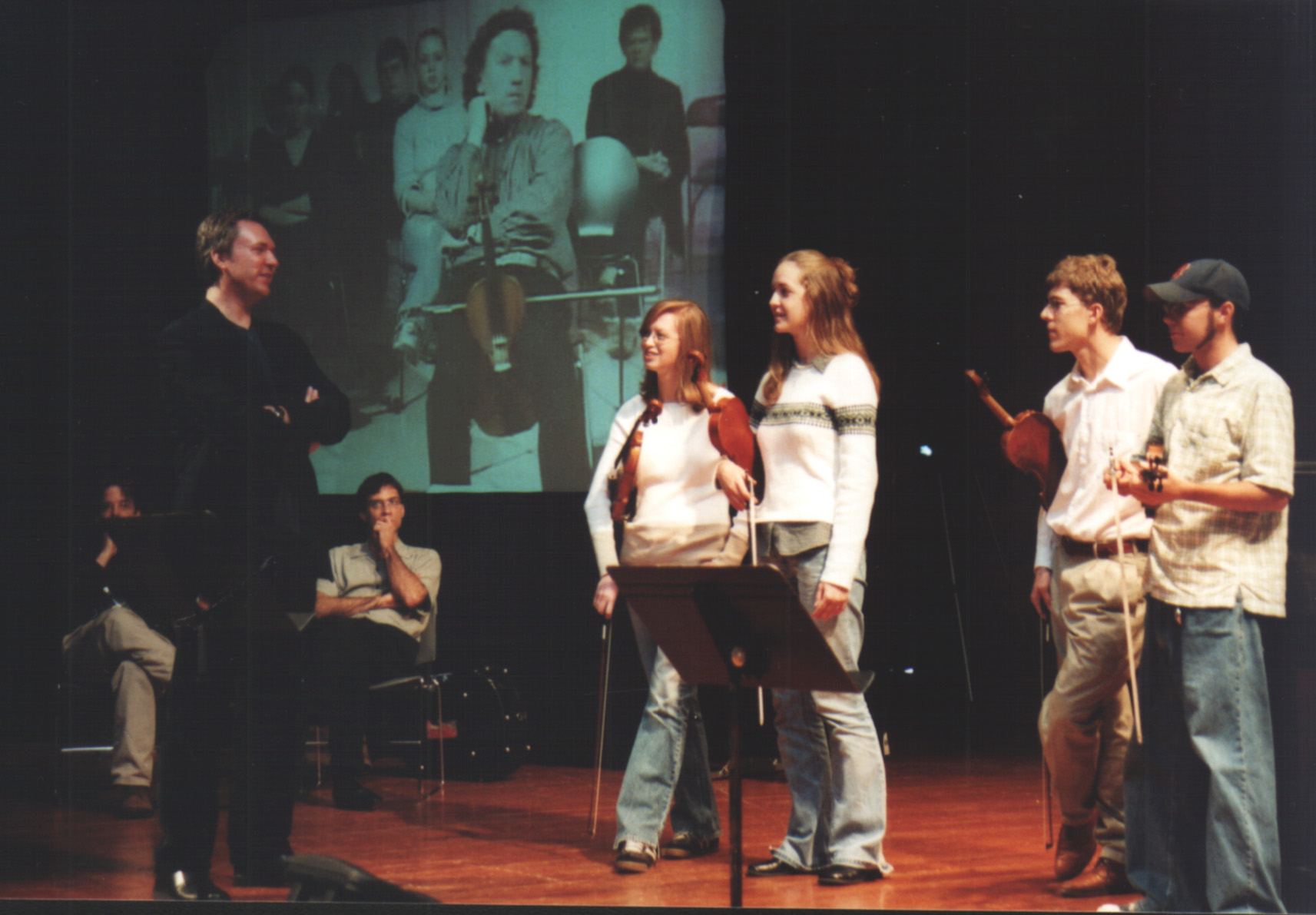
SoundScratch, a part of my MIT Master’s Thesis, is a set of extensions I wrote to manipulate audio in a children’s programming language called Scratch. The environment emphasizes the expressive capabilities of sound through the act of creation and design. It is biased toward digital sound manipulation as a personal, meaningful and fun artistic endeavor, rather than as a venture into mathematical, electronic or networking relationships.

Lead by their own curiosity, children can design their own sounds by exploring SoundScratch. In doing so, they will indirectly learn a great deal about networks, mathematics and hardware synthesizers and sequencers.

SoundScratch is intended to shift the child’s focus from the product of creation to the process of creation. Audio processing was written in Csound.
MIT Master’s Thesis.pdf

Similar Posts

  • TV Mountain

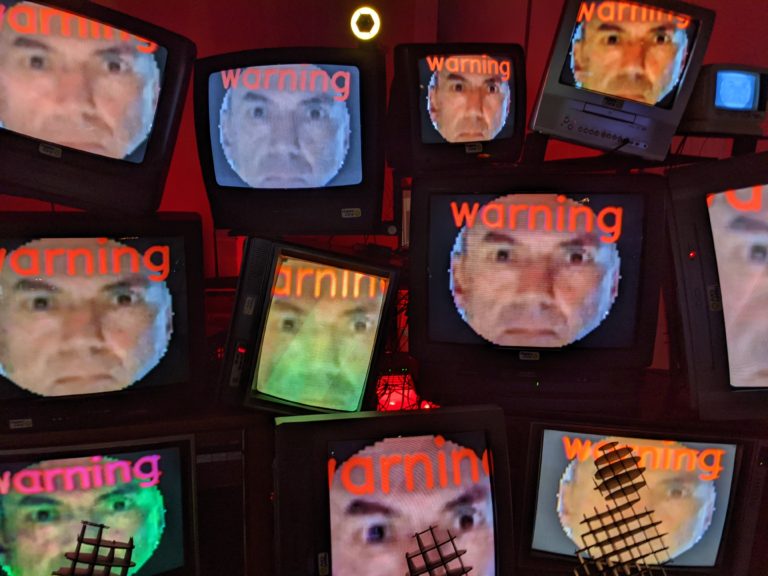
    TV Mountain is an art piece which was initially installed as part of TechArtICT’s Dreamgrass installation at Exploration Place Fall 2022. It consisted of 12 TVs at various angles and orientations, together forming a jumbotron. As part of Dreamgrass, it subjected faceless child-like objects to a litany of 80s commercials. The working remote enjoyed a…

  • DoubleTalk

    Doubletalk, a two player audio-manipulation game was my first serious endeaver with the Gameboy. The game used the Pocketvoice, a Gameboy cartridge with a built-in amplified speaker and microphone. In Doubletalk, players record themselves, reverse their recordings, then try to guess what each other is saying.

  • Touch #2

    Touch #2 is a playful virtual environment and an interactive, musical instrument. Viewers become participants through play. The work transforms any flat wall into a touch-sensitive surface. A projector and infrared camera mount on the ceiling and infrared emitters mount on top of the wall, allowing the work to detect as many as 10 touches…

  • Microphone with proximity detection

    Around 2004 I developed a few protoype microphones enhanced to also offer proximity detection. The microphone could adjust it’s amplitude and bass response based on the proximity of the person using it. This would lessen the variable results users experience when holding a microphone too close or too far. Moreover, with proximity or its derivative mapped to a combination…